Table of Contents
Steering daily life can feel like trying to catch smoke with your hands. If you often struggle to focus or misplace items, you may want to consider the possibility of ADHD. Recognizing the signs isn’t straightforward. Understanding how they affect you can bring clarity. What seems like forgetfulness could have deeper implications. Exploring these feelings together can lead to valuable insights.
What Is ADHD and How Does It Affect Daily Life?
ADHD, or Attention-Deficit/Hyperactivity Disorder, can considerably impact your daily life. You might find it challenging to focus on tasks or manage your time.
Maintaining organization can also be difficult. Everyday activities, like work, school, or home responsibilities, can feel overwhelming.
You might struggle with impulsivity. This can lead to hasty decisions or interruptions in conversations.
Relationships may suffer, as others may not understand your behaviors. Recognizing how ADHD affects you can empower you to seek the support and resources that can truly make a difference in your life.
Common Symptoms of ADHD You Should Recognize
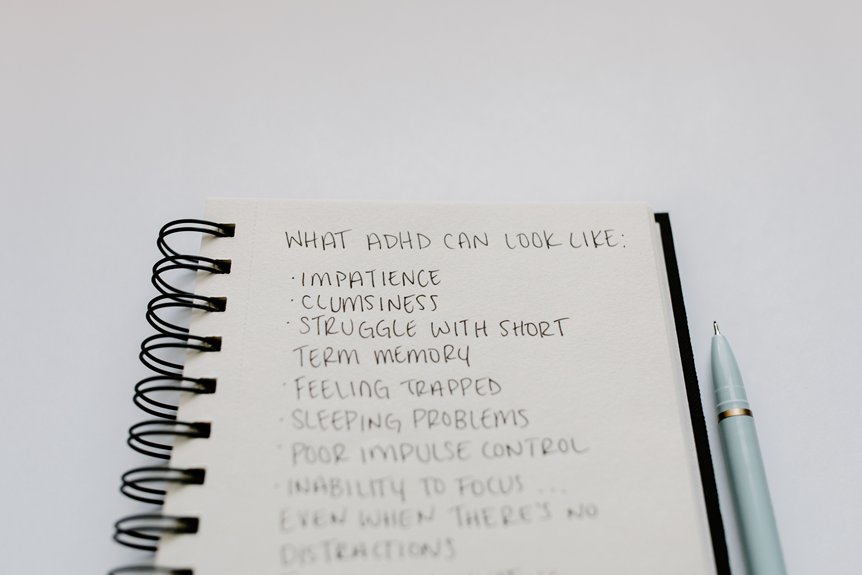
Common symptoms include difficulty focusing on tasks, especially those that seem tedious or uninteresting. You might easily get distracted by noise or movement around you.
Forgetfulness in daily activities, like misplacing keys or missing appointments, can be another indicator. You may also struggle with organization, leading to clutter or missed deadlines.
Procrastination makes it hard to complete projects on time. Finally, you might experience impulsivity, making quick decisions without considering the consequences.
Identifying these symptoms can help in understanding your challenges.
Is Hyperactivity Always Present in ADHD?
Not everyone with ADHD exhibits hyperactive behavior. ADHD manifests in different ways.
Some people may feel restless or fidgety. Others might struggle more with inattention and organization.
Daydreaming, losing focus, or having difficulty completing tasks can be signs of ADHD, even without hyperactivity.
ADHD is a spectrum, and each person’s experience is unique.
If you relate to these symptoms, discussing your concerns with a professional can provide clarity and guidance tailored to your specific situation.
How ADHD-Related Inattention Manifests in Various Settings
Inattention can show up in various ways depending on the environment. At work, you might find it hard to focus on tasks. You often jump from one project to another without finishing.
In social settings, you may struggle to follow conversations. Zoning out or forgetting what was just said is common.
At home, simple chores can feel overwhelming. This can lead to unfinished projects piling up.
During classes or meetings, your mind could wander. This makes it tough to absorb information.
Even while driving, distractions might pull your attention away from the road. Recognizing these patterns can help you understand your experience better.
Discussing them with a professional can provide clarity and support.
Identifying Emotional Challenges Associated With ADHD
Managing daily life can bring a range of emotional challenges linked to ADHD. These challenges can feel overwhelming. Recognizing them is the first step.
You might experience frequent mood swings that seem disproportionate to the situation. Difficulty managing frustration can lead to outbursts or withdrawal.
Feelings of inadequacy or low self-esteem may arise due to perceived failures. You might also feel heightened sensitivity to criticism, making feedback hard to accept.
Anxiety and restlessness can exacerbate emotional turmoil.
Understanding these emotional responses helps you navigate your experiences better. Identifying them allows you to work toward developing coping strategies that foster emotional resilience.
Recognizing When to Seek Professional Help for ADHD
Recognizing when to seek professional help for ADHD can be intimidating. If your symptoms—like impulsivity, difficulty focusing, or emotional dysregulation—are impacting your relationships, work, or self-esteem, consider reaching out.
Feeling overwhelmed, anxious, or consistently frustrated? A professional can provide guidance tailored to your needs. Seeking help isn’t a sign of weakness. It’s a proactive step toward understanding yourself better.
Engaging with a therapist or doctor can clarify your experiences. It can also open doors to effective treatment options. Trust your instincts. If something feels off, discussing it with a professional can be an important step in your journey.
Effective Strategies for Managing ADHD Symptoms
Once you’ve sought professional help for ADHD, it’s time to explore effective strategies to manage your symptoms. Implementing these techniques can make a significant difference in your daily life.
Establish a routine. Consistency helps reduce distractions and improves focus.
Break tasks into smaller steps. Tackle one thing at a time to avoid feeling overwhelmed.
Use timers and reminders. Set alarms to keep yourself on track with tasks and appointments.
Incorporate physical activity. Regular exercise can boost concentration and reduce impulsivity.
Practice mindfulness. Techniques like meditation can help calm your mind and improve self-awareness.